What is being NATIVE and how does a NATIVE person see the world?
The landscape talks to us through colours and texture far beyond what the untrained eye can see – through the shift in colours in the sky and water, the contrast from land to sea and the emotional connection to country.
Being NATIVE in the past was a negative experience, with a system that was designed to constantly hold down NATIVE people and take away or
not recognise our rights and values. Being NATIVE was viewed as beingliterally part of the landscape, like livestock that was owned and abused.
Being NATIVE today reflects on the survival and resistance of not only thefirst peoples of this land but also the longest living culture on the planet.Culture is in a revival stage and the values of looking after country havebecome mainstream. NATIVE people are at the forefront of protectingland and sea and the native animals that share this land.
The systemic injustice of Australia’s past policies and views of beingNATIVE has been hidden for generations, but the use of modernstorytelling has started to illuminate this history for a wider audience.Hopefully this series, as an abstract slice of what NATIVE means as aword, connection and view point, can shift the audience from ignoranceto empathy to make change for the future.
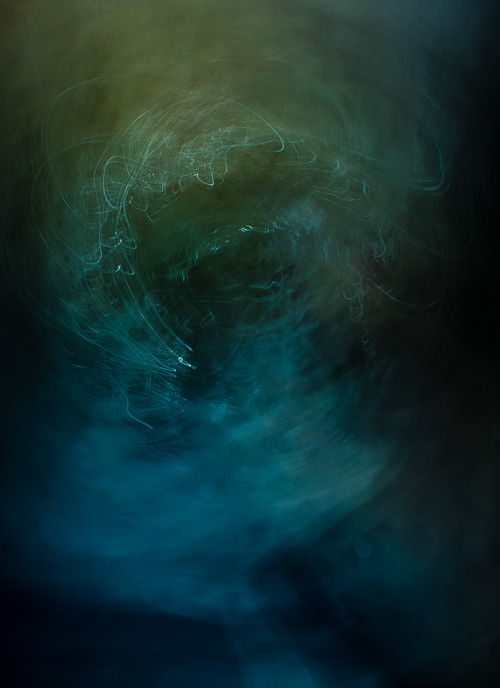
Banu (east)
“The cool tones of the eastern storms welcome change”

Beautiful Violence
“Watching the world change from day to night creates beautiful violence above”
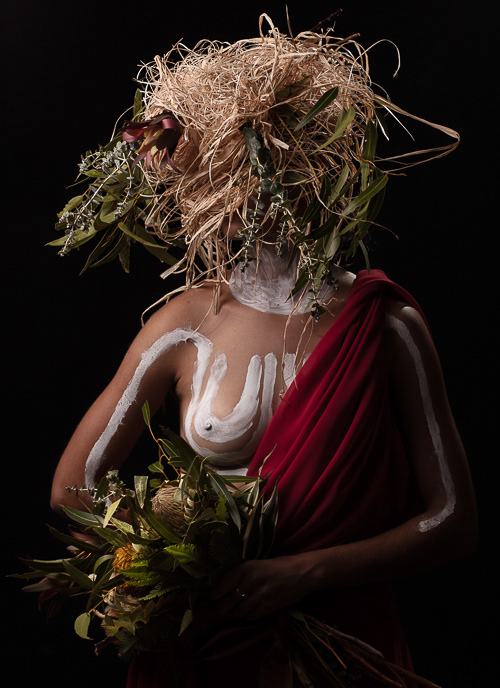
Bibi Jalygurr (mother baby)
“Even through trauma the native woman loves and shared culture to the child”
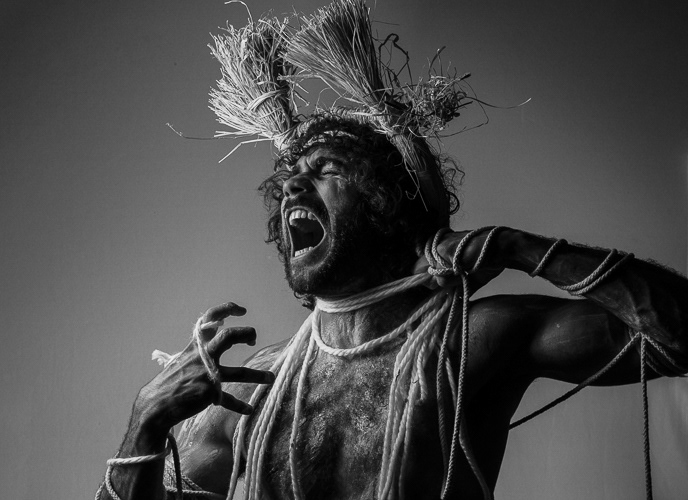
Biligaja (fighting)
“Fighting the system to save young black men through culture”
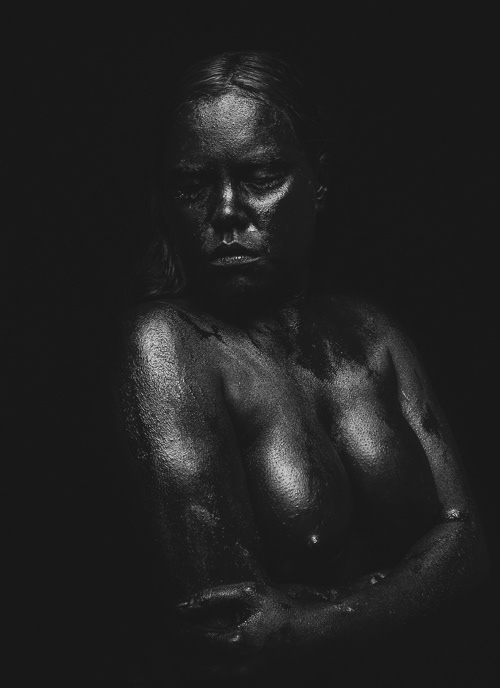
Black Velvet
“The taboo of dark skin has always been in the shadows”
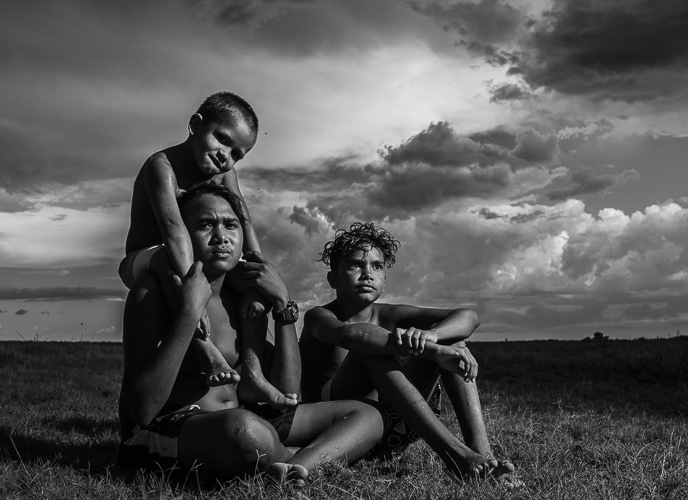
Humbug
“What future do black youth have navigating this white world”
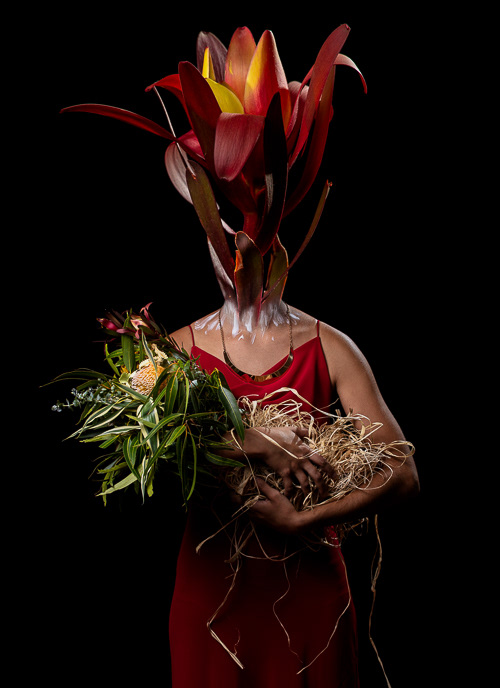
Bubu (flower)
“A mother’s love her child outlasts trauma”
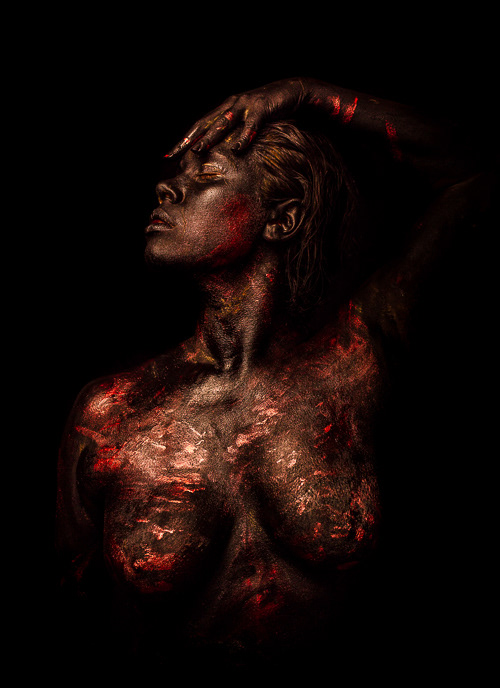
Burdij (burn)
“After the fire a woman’s liyan (spirit) grows stronger”
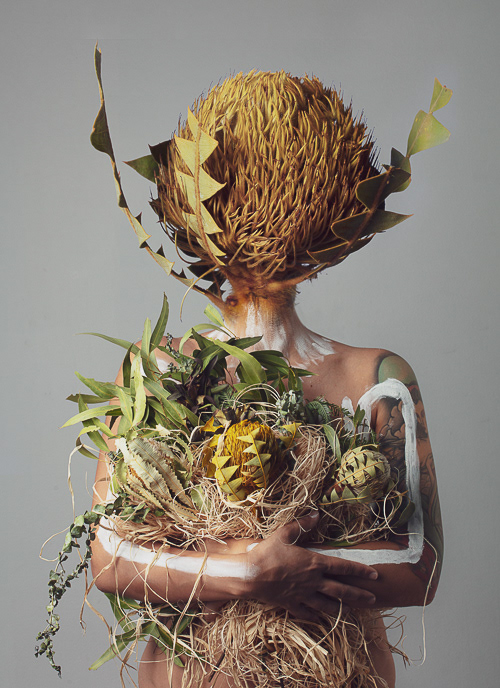
Empowerment
“The empowerment of the modern native woman”
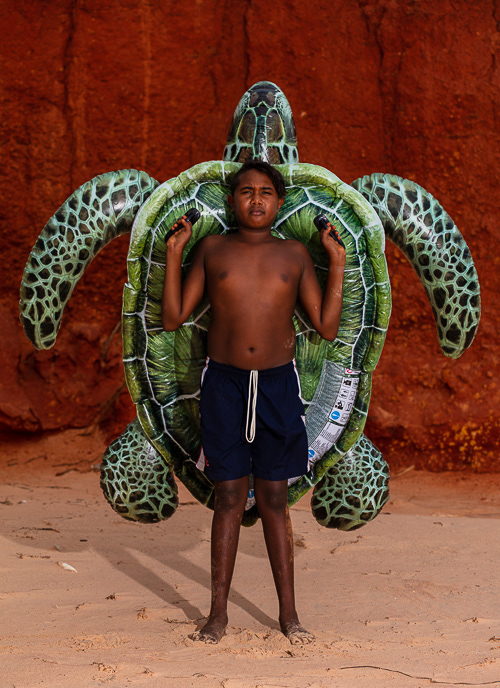
Future Hunter
“What will be left for our next generation to hunt”
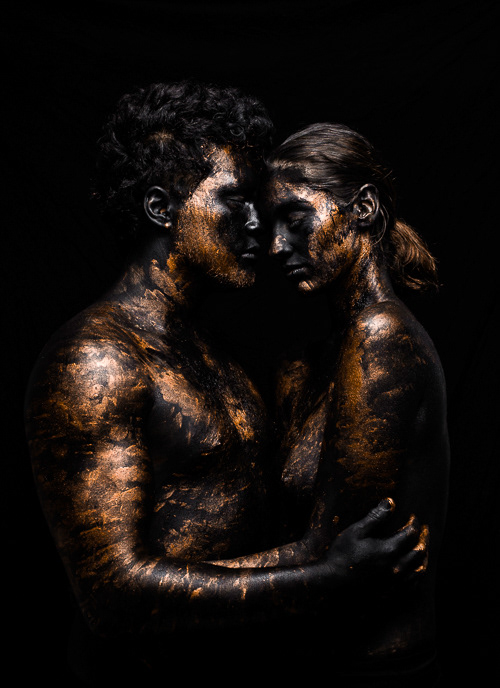
Gabarli (wife, husband)
“The beauty of connection and embrace of skin the right way”
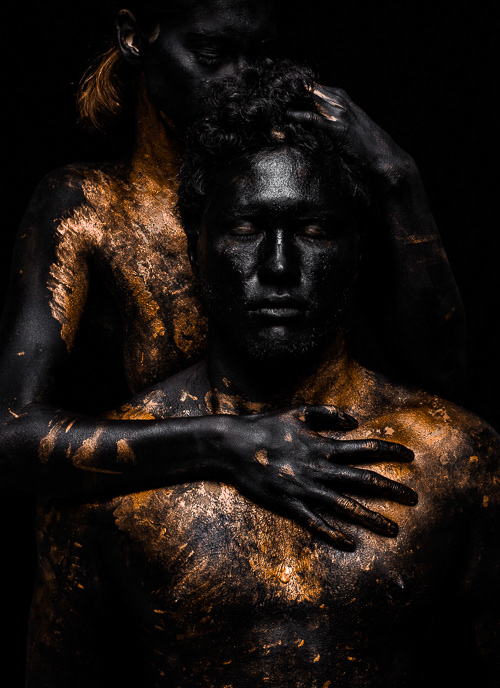
Garrbina (shield)
“Only together we shield each other from outside harm”
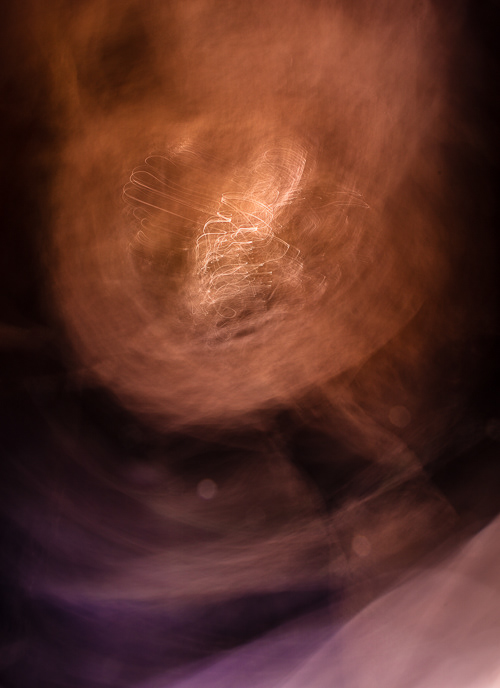
Gularr (west)
“The warm tones of a western storm brings the end of day“
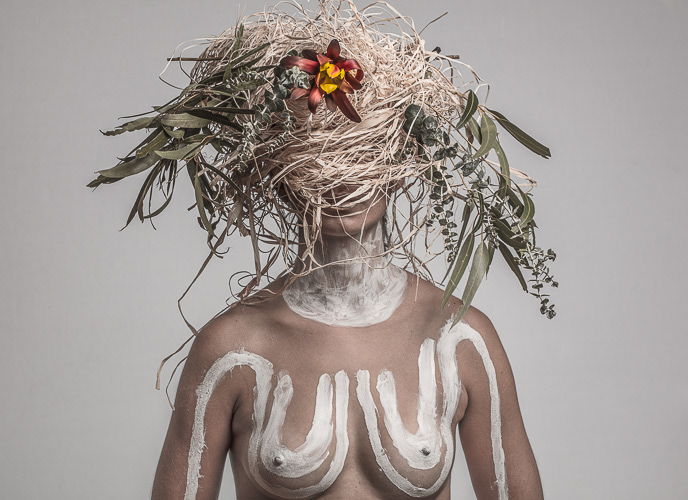
Jarndu (woman)
“The native woman beauty and culture beyond the lens of flora”
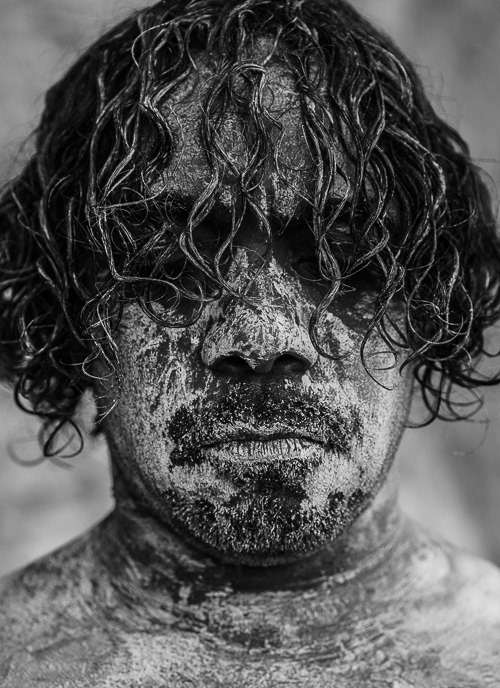
Jarriny (always)
"Our culture never died, it was only asleep”
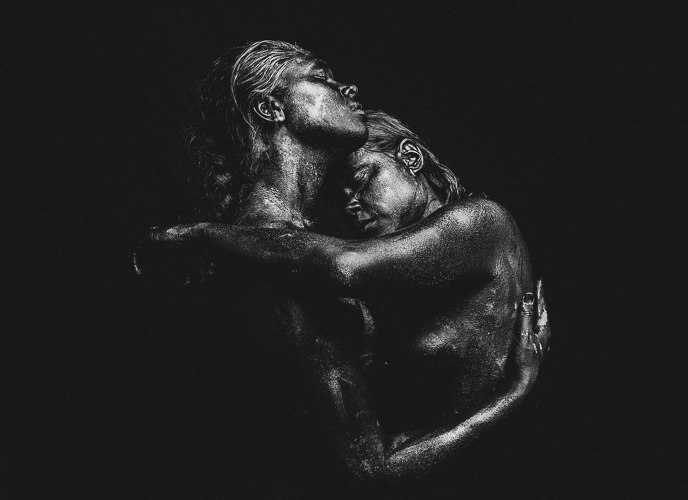
Jija (sister)
“The strength in the embrace of a sister heals trauma”
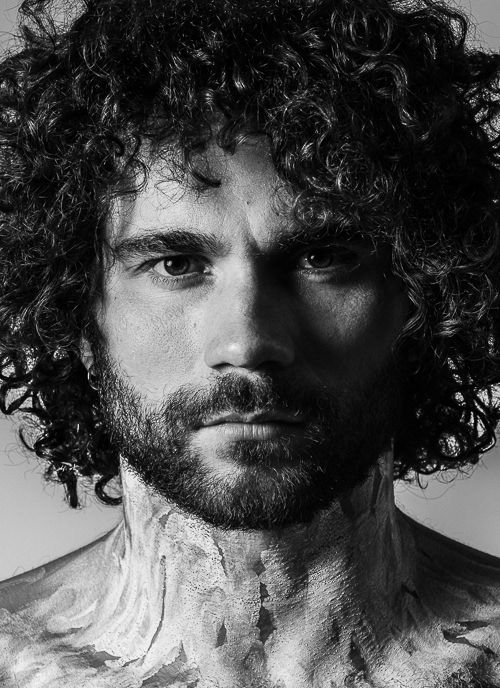
Miliya (now)
“Awake to evolving our culture”
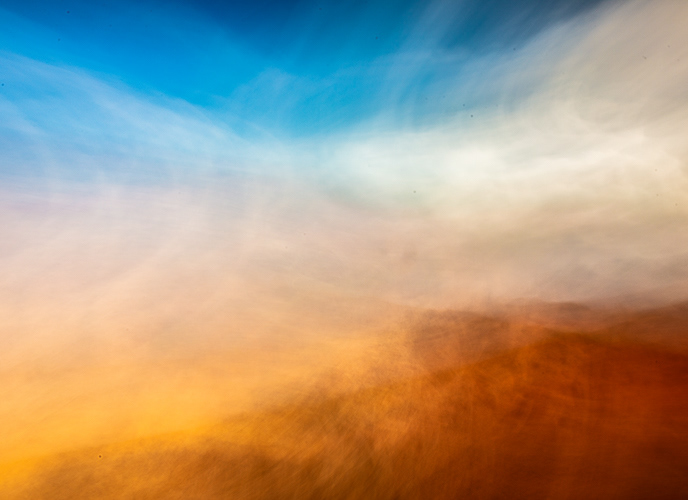
Minyirr
“The colours of my country, the colours of my Liyan (spirit)”
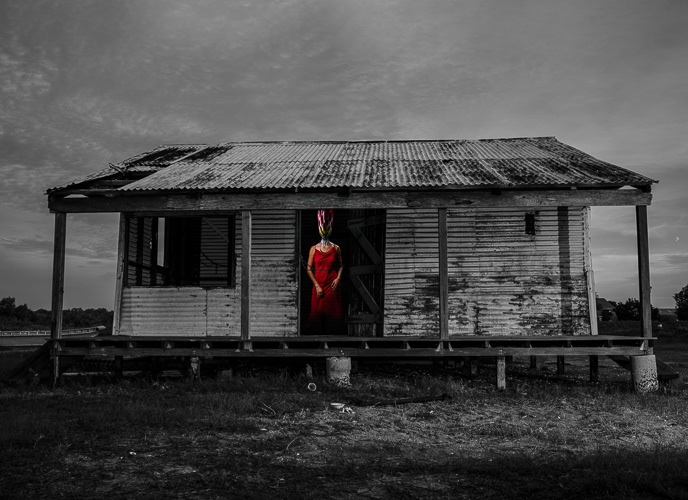
Property
“Inside or outside doesn’t matter when you are viewed as property”
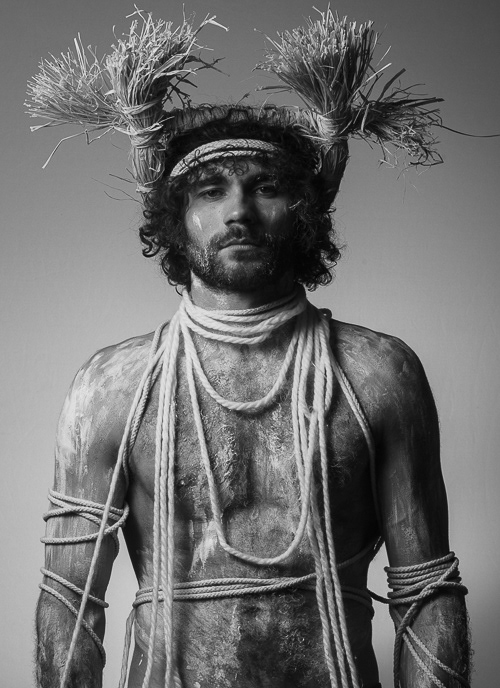
Rangga (proud)
“Pride in our men and culture”
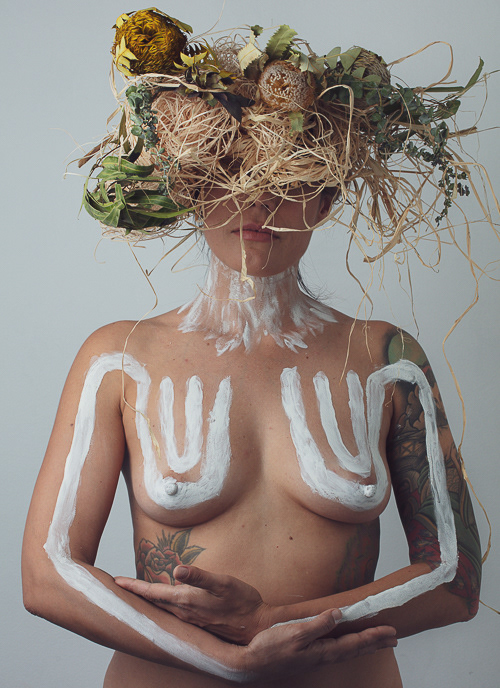
Systemic
“Systemic problems of yesterday and still present today”
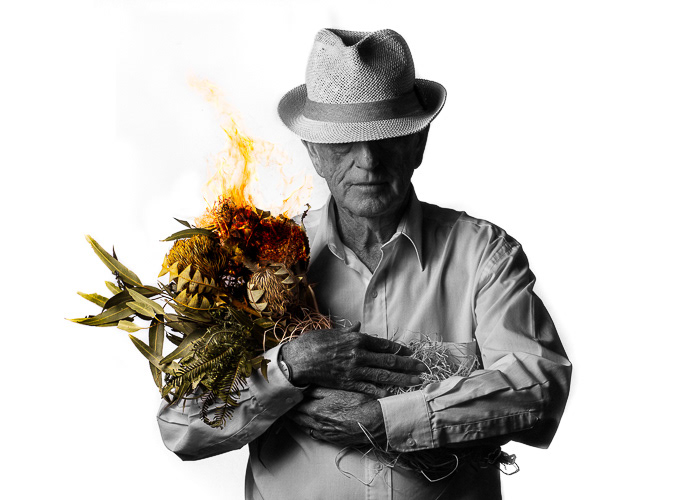
The Protector
“Mr Nevile who controlled the natives and took the children away”
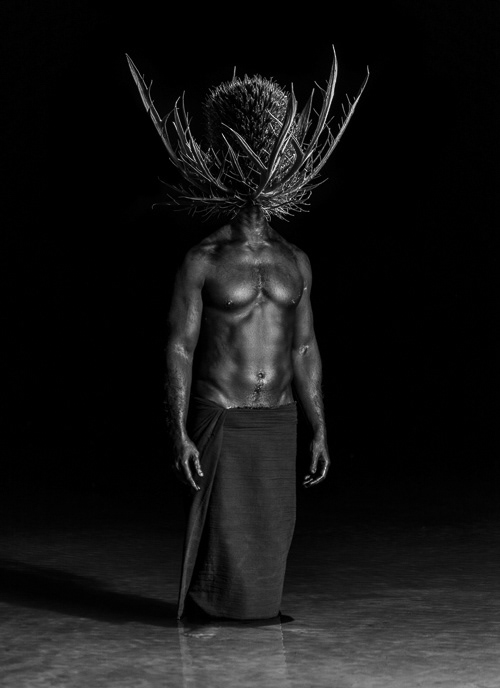
Wamba (man)
“Pride amongst black men even treated as part of the flora”
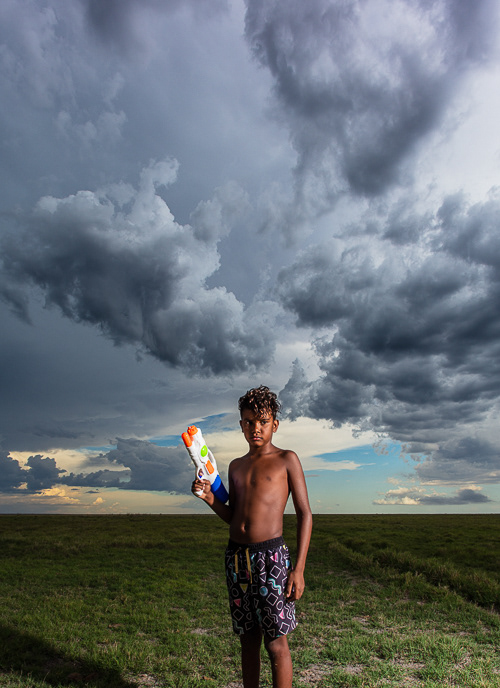
Water Warrior
“Who will fight for the future of our water”
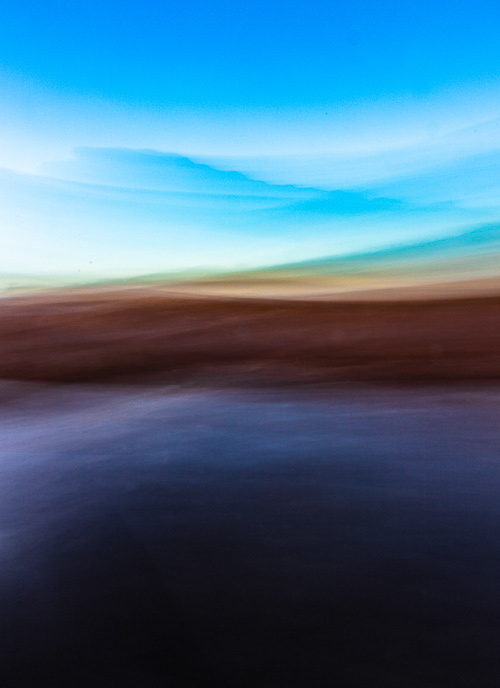
Wirralburu (cooling season)
“A cool change on the landscape brings hope”
NATIVE Q&A – Michael Torres responses
What has been the inspiration for your current series, NATIVE?
This series has been locked in my head for a few years. Through myrecent exhibitions I have integrated more political messages in my work,while continuing to develop my visual signature. In this series I wanted toilluminate the dark history of Australia and explore the idea of being‘native’ in an abstract and conceptual way. Past views and policiesstripped native people of their culture and humanity – treated as propertyto be owned by white landowners, with their fates controlled by stateAboriginal ‘protectors’. Although there was no explicit legislationcategorising Aboriginal people as flora and fauna, governments at thetime treated us as if we were. In a more positive light, elements of thisseries expose the relationship that native people have to each other aswell as our deep connection to country. In this series it was important tome to show not only the negative effects of being native but also therebirth of our identity as native people.
How do you come up with your titles?
I predetermine most titles at the conceptualisation of a series. Workingwith a theme and then sketching my ideas down on paper helps mevisualise the story and image. I then work on a short title that lays theseed for the viewer to break down the image and make their ownconnection with the work.
When did you first become interested in photography?
I’ve had a taste for photography since I was a child. My father always hada camera handy for family photos. We did a lot of travelling and campingalong the west coast of Australia and we often captured these momentson camera. Fast forward to my teen years and I could only afford apoint-and-shoot camera. I captured my adventures in Perth whilestudying at university, meeting new friends and just snapping awayrecording the mundane aspects of teenage life – I guess it was the
Instagram of the 90s. After a career in media and television, Irediscovered my love for photography and felt the need to create andshare my own stories.
What is your creative process? How do you plan your compositions?
Firstly, I look inwards to my own personal experiences and those of myfamily and friends, while also then reading from historic records (whichusually tell a very one-sided view, but it helps to reaffirm the works). Iusually have a note pad with me that I sketch in with concepts and ideasas they come into my head. Usually it’s in a café while I’m having a coffee,which has been a good life change for me since moving to Melbourne inmid-2018. Being away from my home town of Broome has forced me toactually work on my concepts and get them down to paper, as shootingopportunities are now limited with me being on the other side of thecountry. But it has also helped me create and strip back some conceptsso they work anywhere I can shoot. Once the concepts have been onpaper for a while, I then work on how they connect as a series and startnetworking and reaching out to countrymen and new people to work onthe series. I work with whoever is available, which also helps shape thefinal look, as I use mostly everyday people and not models, if possible.Once the concept and subjects are sorted, it’s about finding the locations.In Broome I would always shoot on country, which gave my work acertain signature look and feel, and use the natural sunset light as mycreative studio. Since being in Melbourne, my locations have shifted tourban spaces. I can be a mobile studio on legs and get around on publictransport, which to me is still a novel thing since moving to the city. I usemy sketches as a lighting and composition map – figuring out the shot onpaper before shooting helps me be efficient and focused. I tend to cull mywork on paper before shooting and once everything is shot I sit on mylaptop to do a mass cull. I then print out thumbnail prints to do a finalselection over a coffee in the café where I first started sketching, as a nicecomplete circle of creativity. I’ve learnt that my sketches have given me
the ability to really sort out in my head what can and will work and stripaway the elements that don’t help the overall visual story I’m wanting totell.
Is there a spontaneity?
I plan everything through my sketches, but of course life doesn’t alwaysgo to plan and photography is not immune to this. I have had to shiftfocus when elements don’t come together – like locations and weatherconditions – and being on the ‘wrong’ side of the country for a certainlook has been challenging. But the most stressful time is always whenpeople are not available (which can scrap a whole concept) or when anew concept is born when new people want to be involved, which isalways a great problem to have. Once I’m shooting, some compositionsmight work on paper but not through the lens, and also lighting issues willshape the final emotional look of a shot. I’m always flexible and I have afinal image in my head but because I’m working with everyday people Ihave to be open and warm and less cold and technical. Making mysubjects feel comfortable is the first challenge to overcome – if thesubject feels connected to the image then it always works out.
What do you hope viewers will take away from the exhibition?
This show, like all my others, is about planting the seed of an idea, andallowing the viewer to find their own connection within the composition.The colour and texture in the works draw the viewer’s eye towardsdifferent elements of the image, which the viewer is challenged to piecetogether and understand as a representation of being native. Ultimately, Iwant people to walk away wanting to learn more about Australia’s darkhistory and the past and present realities of being native in this country.
What challenges your creativity?
There are many challenges to creating art, and photography presentssome unique issues. A major challenge is drawing on my own personal
history to illustrate my connection to the themes in my work. Being openabout my personal experience is confronting but also a necessity, Ibelieve, in this stage of my art. Alongside the challenges there arerewarding moments, like when I can figure out a concept in my head andeventually see it as a tactile print in my hands.
What was your favourite work from NATIVE to create?
My favourite work is probably Native Woman, which is one of the imagesin the native flower set. The head swap is an old trick that’s been donecountless times before but I wanted to put my own spin on it and connectthe native flowers to the view of what being a native person means. Iwanted to explore the connection to country and culture but also touchon the past and present political views of this country’s first nationspeople, including the fact that we were once treated like flora and fauna.In addition to the native flower set, in this series I have continued myembellishment of prints by hand drawing paint designs onto select works.Working on the paper in this way provides an additional layer of story-telling. In my past series Scar and Scar II I have actually cut into the printto reveal the white paper beneath the image.
Michael Jalaru Torres’s photographic series NATIVE is a visceral, unapologetic exploration of Indigenous identity, survival, and deep-rooted connection to Country. As a Yawuru man from Broome, Western Australia, Torres utilizes fine art photography not merely to document, but to deconstruct history, challenge colonial frameworks, and visually reclaim space.
The exhibition titles—ranging from raw socio-political indictments like Systemic and Mr Neville to elemental invocations like Water Warrior, East Storm, and Jarndu (woman)—create a conceptual dialogue that balances deep cultural reverence with sharp contemporary critique.
Sovereignty and the Natural Canvas
In NATIVE, human bodies are not separate from the landscape; they are continuous with it. In pieces like Jarndu (woman), Torres frames the subject adorned with organic matter—tangled native grasses, eucalyptus foliage, and dark flora that spill down like a living crown. The face is purposefully obscured by a nest of spinifex or straw, redirecting our gaze to the white ochre body paint gracing the neck and chest.
This visual choice acts as a brilliant subversion of the traditional ethnographic gaze. Rather than allowing the audience to consume a passive portrait, the subject exists entirely on their own terms, fiercely grounded in the identity of the land.
Striking the Balance: Resistance and Regeneration
The sequencing of the series suggests an internal tug-of-war between the weight of history and the hope of the future:
The Weight of Intervention: Works like Systemic and Mr Neville directly confront Australia's dark assimilationist history (referencing figures like A.O. Neville, the Chief Protector of Aborigines). These titles suggest a conceptual wrestling match against structural oppression.
The Call to Fight: In Water Warrior and Future Hunter, there is an undeniable current of agency. These are not portraits of a romanticized past; they are conceptualizations of modern protectors who weaponize their history to safeguard what remains.
The Cycle of Life: Pieces such as Native Milk and Cycle soften the exhibition's political edges into moments of nurturing and legacy, pointing directly to the passing down of knowledge and the unbreakable matrilineal and patrilineal bonds to the earth.
The Verdict
Torres's studio and conceptual lighting choices create a stark, high-contrast aesthetic that strips away unnecessary distractions, forcing the viewer to look at the textures of the skin, the ochre, and the native flora. NATIVE is an incredibly potent exhibition. It takes the concept of being "native" to a place—something historically weaponized by colonizing powers to marginalize Indigenous populations—and completely flips it, transforming it into an emblem of unmatched sovereignty, complex humanity, and artistic brilliance.