Mother Earth Burns as scars tattoo across her skin, her life-giving flowdried to dust. Her tears are salty to the tongue as her voice burns red. Shecries out to those who are willing to listen to her song.
A collection of works showcasing the environmental effects of humandevelopment on native land and the impacts on Native peoples’connection to country.
Using imagery of ghostly figures frozen in time within the landscape,these works evoke the cries of wind, water and fire echoing across atimeless country.
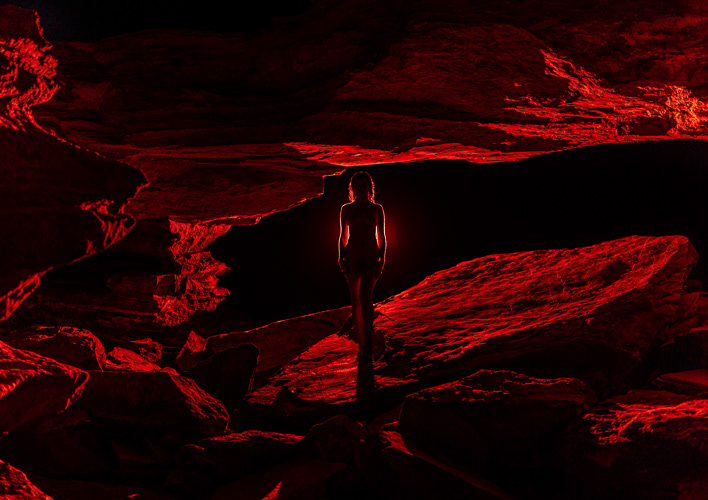
Blood Flows Over Falling Stone
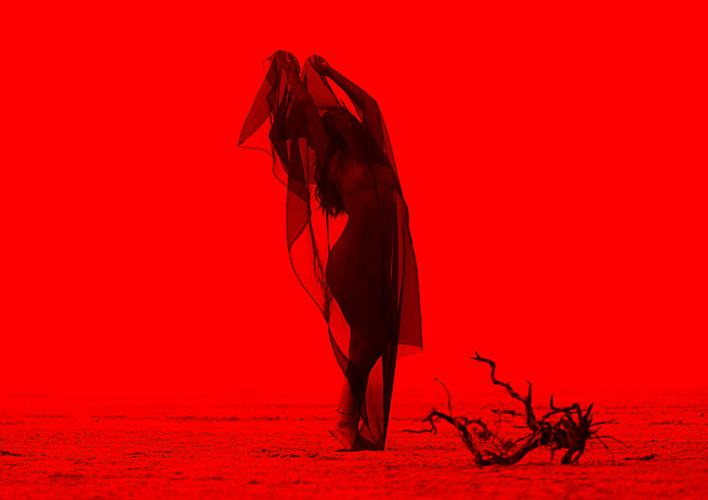
In Awe of Her Power
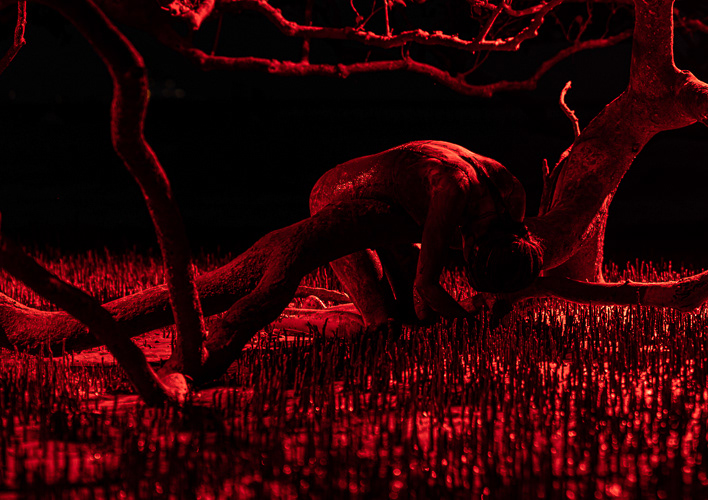
Our Oceans are Drowning

Protect Her and She Will Protect Us
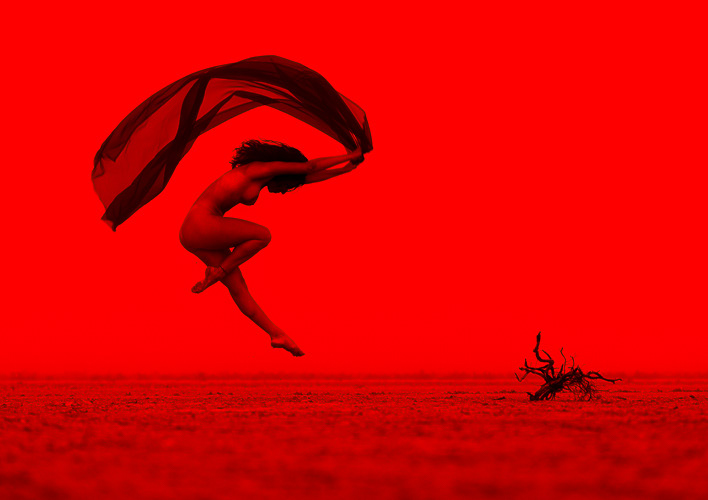
Subscribing to the Destruction
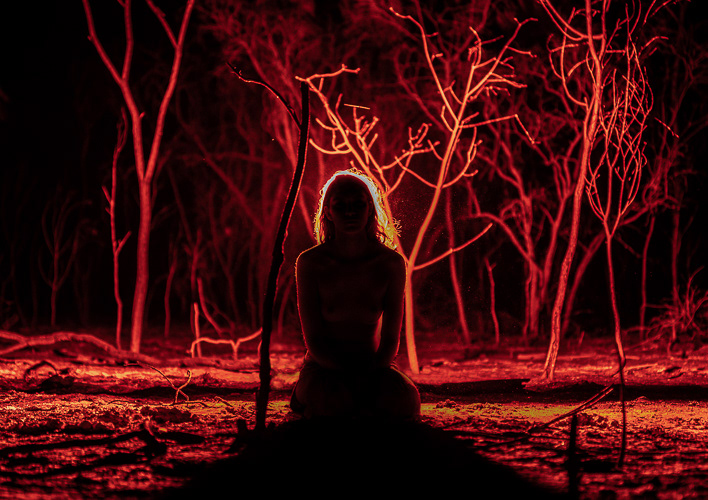
Watching Our Country Burn as She Cries
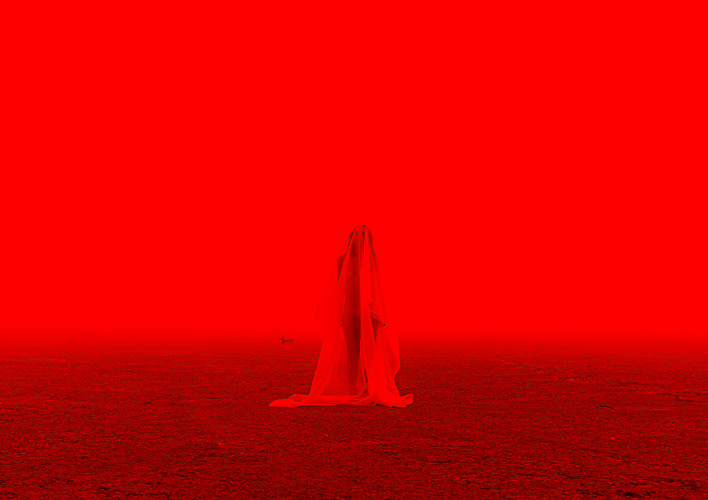
Witnessing the Aftermath
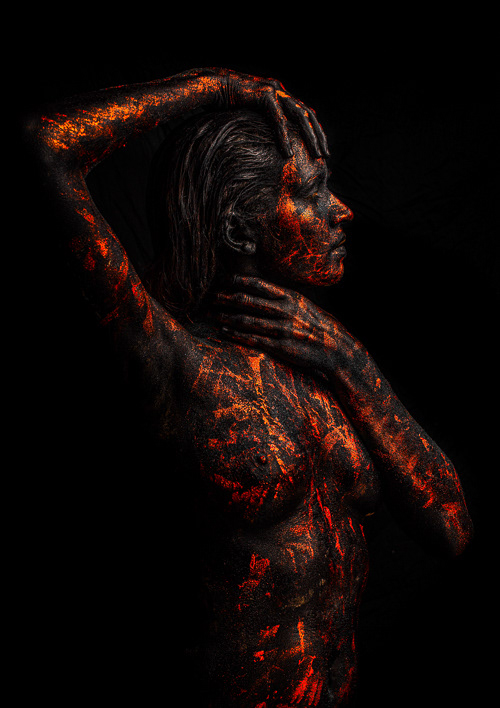
An appetite for self-destruction
Echoes in the Crimson Dust: A Review of Michael Jalaru Torres’ ‘MOTHER EARTH BURN’
In the haunting space of MOTHER EARTH BURN, Indigenous fine art photographer Michael Jalaru Torres (an Indigenous artist from the Kimberley region of Western Australia) crafts a visually arresting and deeply emotive lamentation for Country. The exhibition operates as both an intimate conversation and an urgent, universal cry, laying bare the profound environmental destruction wrought by modern industrial development on native land and the heavy, compounding impacts this has on Native peoples' connection to Country.
The Visual Narrative of Trauma
Torres’ conceptual framing treats the landscape not as passive scenery, but as a living body experiencing active trauma. The thematic core of the collection centers on a striking, poetic truth: “Mother Earth Burns as scars tattoo across her skin, her life-giving flow dried to dust.”
Visually, this text materializes through a visceral palette dominated by a searing, ominous red light. The crimson hues feel simultaneously primordial and apocalyptic—evoking the rich red dirt of Traditional lands while channeling the literal and metaphorical fires of destruction.
Central to the emotional weight of these images are the ghostly figures frozen in time within the landscape. They stand or kneel like spectral witnesses or physical manifestations of the spirits tied to the earth. In pieces like Watching Our Country Burn as She Cries and Witnessing the Aftermath, these figures act as mirrors for the viewer. They are deeply enmeshed with the environment, wrapped in skeletal branches that appear lit by an eerie, residual glow. The visual grammar of these compositions effectively mimics the cries of wind, water, and fire bouncing across an ancient, timeless terrain.
A Sequence of Devastation and Hope
The collection flows through a deliberate arc of titles that read like chapters of an unfolding environmental and cultural reckoning:
The Weight of Destruction: Pieces such as Subscribing to the Destruction and Our Oceans are Drowning act as immediate indictments of systemic human exploitation. The visuals challenge the comfort of the viewer, drawing a straight line between rapid modern expansion and the fragmentation of sacred terrain.
The Cry of Country: In Blood Flows Over Falling Stone, the land bleeds. The composition forces an understanding that to scar the earth is to break a piece of the human spirit connected to it.
Reciprocity and Power: Yet, the exhibition refuses to settle entirely into despair. Works like In Awe of Her Power remind us of the immense, indomitable scale of nature, culminating in the spiritual thesis of the show: Protect Her and She Will Protect Us.
Final Verdict
MOTHER EARTH BURN is a masterclass in conceptual Indigenous photography. Michael Jalaru Torres effectively translates invisible, deeply felt cultural grief into tangible light and shadow. The exhibition does not merely ask us to look at a wounded landscape; it forces us to listen to a song of survival, inviting anyone willing to hear the ancient rhythms echoing through the smoke and dust.